

Ethiopian Opal vs Australian Opal: A Complete Guide to Differences in Color, Formation, and Value


Opals are among the most mesmerizing gemstones on Earth, known for their shifting flashes of color that seem to move within the stone. But when people search for opals, they often discover two major sources dominating the market: Ethiopian opals and Australian opals. While both are beautiful and valuable, they differ in origin, for\mation, structure, appearance, and care.
Understanding these differences helps collectors, jewelers, and gemstone enthusiasts choose the opal that best fits their needs.

Geological Origins
Australian opals are formed in sedimentary rock layers that date back millions of years. These stones are often found in arid desert regions such as Lightning Ridge and Coober Pedy. The slow formation process in sedimentary conditions creates stable, non-hydrophane opals.
Ethiopian opals, primarily from the Wollo region, form in volcanic rock. These stones are younger in geological age and develop from silica-rich water filling cavities in volcanic rock. This volcanic origin gives Ethiopian opals their crystal clarity and luminous internal fire.
Play-of-Color and Visual Differences
The most famous feature of opals is their play-of-color — flashes of spectral colors caused by light interacting with microscopic silica spheres inside the stone.
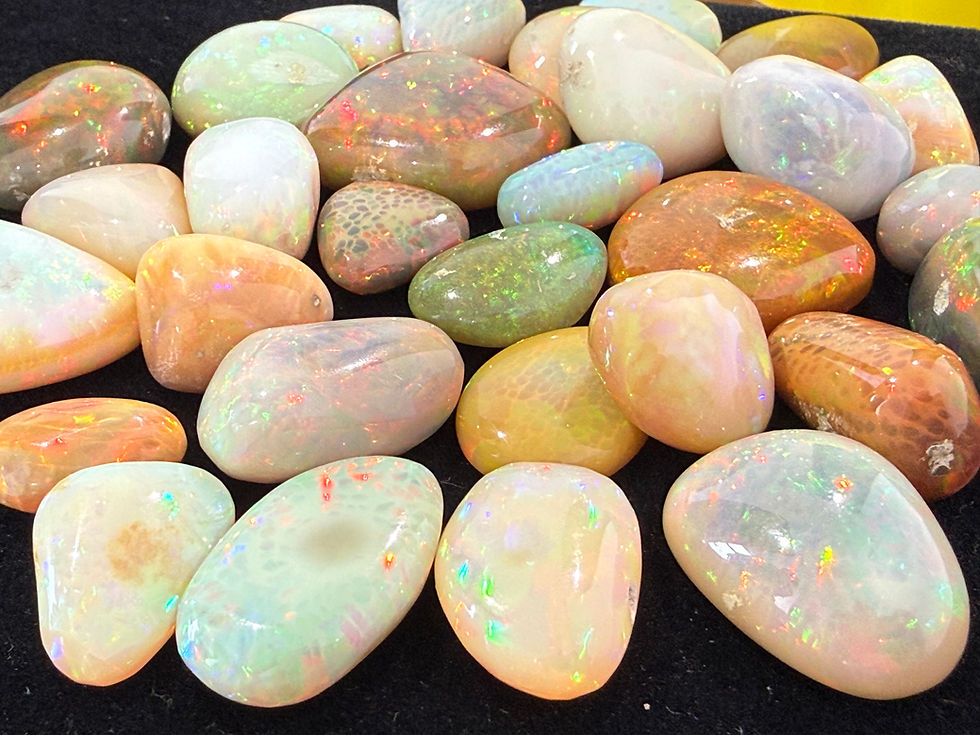
Ethiopian opals are known for:
Crystal-clear or translucent body tones
Bright, wide flashes of red, green, and blue
Honeycomb or cellular internal patterns
Luminous depth
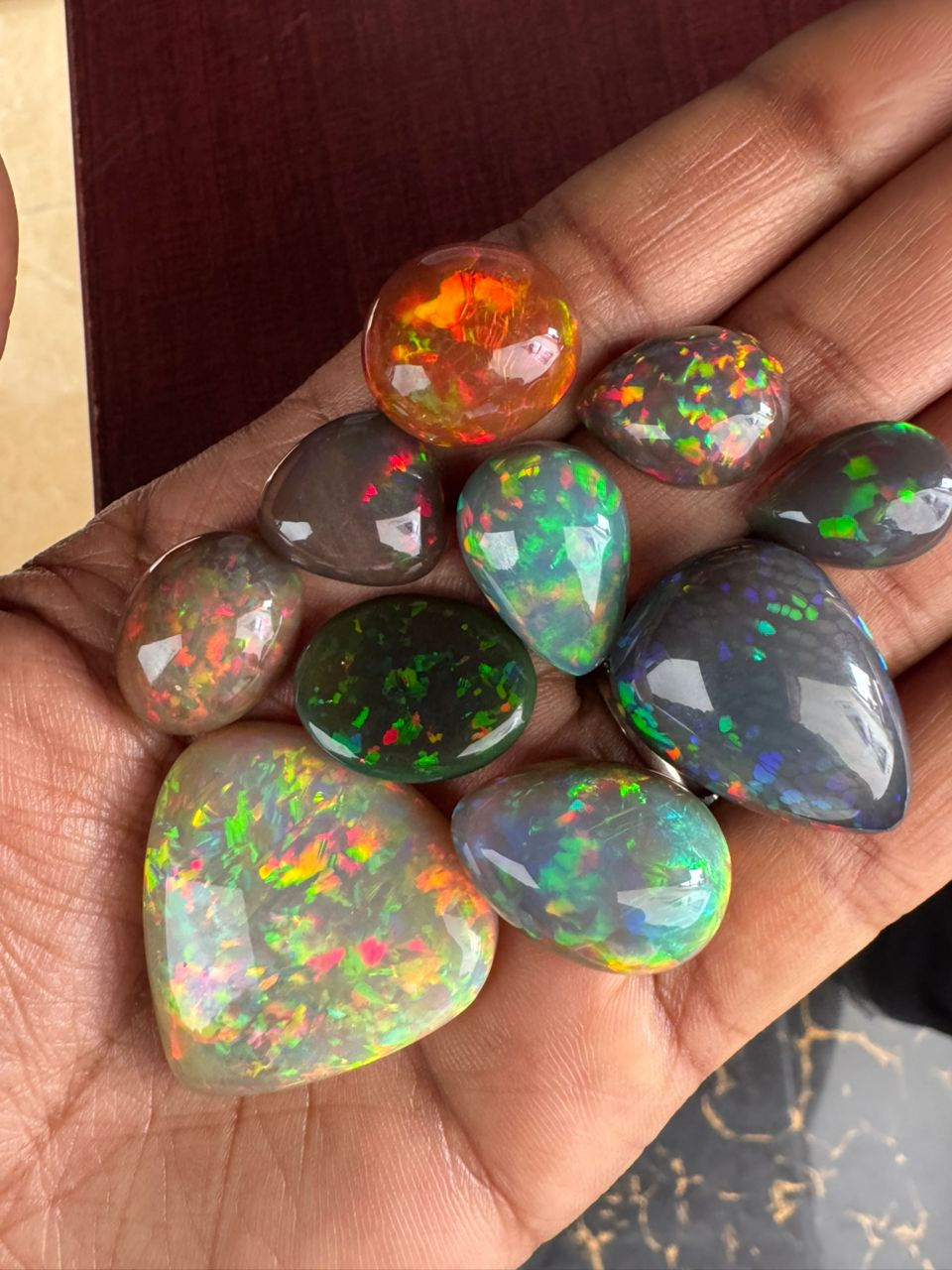
Australian opals are known for:
Darker body tones (especially black opals)
Strong contrast between color and background
Pinpoint or broad flash patterns
Opaque or semi-opaque appearance
Hydrophane vs Non-Hydrophane
A defining difference is that many Ethiopian opals are hydrophane, meaning they can absorb water. This may temporarily change their transparency. Once dry, the stone returns to its natural look.
Australian opals are typically non-hydrophane, making them more stable in varying moisture conditions.
Durability & Jewelry Use
Both types are suitable for jewelry, but they require care.
Ethiopian opals should:
Avoid prolonged water exposure
Be stored away from humidity
Be cleaned gently
Australian opals are generally more stable but should still be protected from impact.
Value & Market Trends
Australian black opals can be among the most expensive gemstones in the world. Ethiopian opals offer exceptional beauty at more accessible prices, making them popular among new collectors.
High-quality Ethiopian opals with strong fire and honeycomb patterns are increasingly sought after.
Aesthetic Preference
Choosing between Ethiopian and Australian opals often comes down to taste.
Prefer luminous transparency? → Ethiopian
Prefer dark dramatic contrast? → Australian
Final Thoughts
Both Ethiopian and Australian opals are remarkable gemstones shaped by nature’s unique processes. Ethiopian opals offer brilliant fire and crystal clarity from volcanic origins, while Australian opals offer stability and contrast from sedimentary formation.
Understanding their differences allows buyers to appreciate each stone’s character and make informed choices.

Comments