

How to Choose a High-Quality Ethiopian Opal: A Buyer’s Guide to Color, Clarity, and Value

Ethiopian opals have become some of the most exciting gemstones in the jewelry world. Known for their vivid play-of-color, crystal clarity, and unique honeycomb patterns, these stones offer remarkable beauty and variety. But because no two opals are exactly the same, knowing how to judge quality is essential before buying.
This guide explains the key factors that determine the quality and value of Ethiopian opals, helping collectors and jewelry buyers make informed choices.

1. Play-of-Color The Most Important Factor
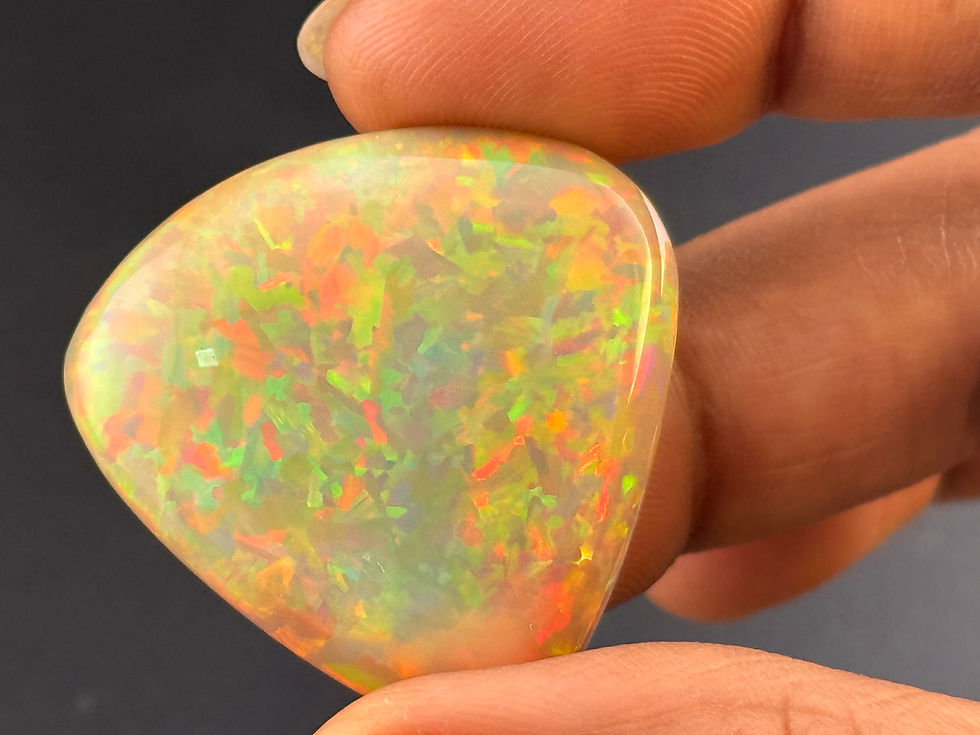
The defining feature of any opal is its play-of-color, the flashes of rainbow colors that move inside the stone when light hits it.
High-quality Ethiopian opals typically show:
Bright, intense color flashes
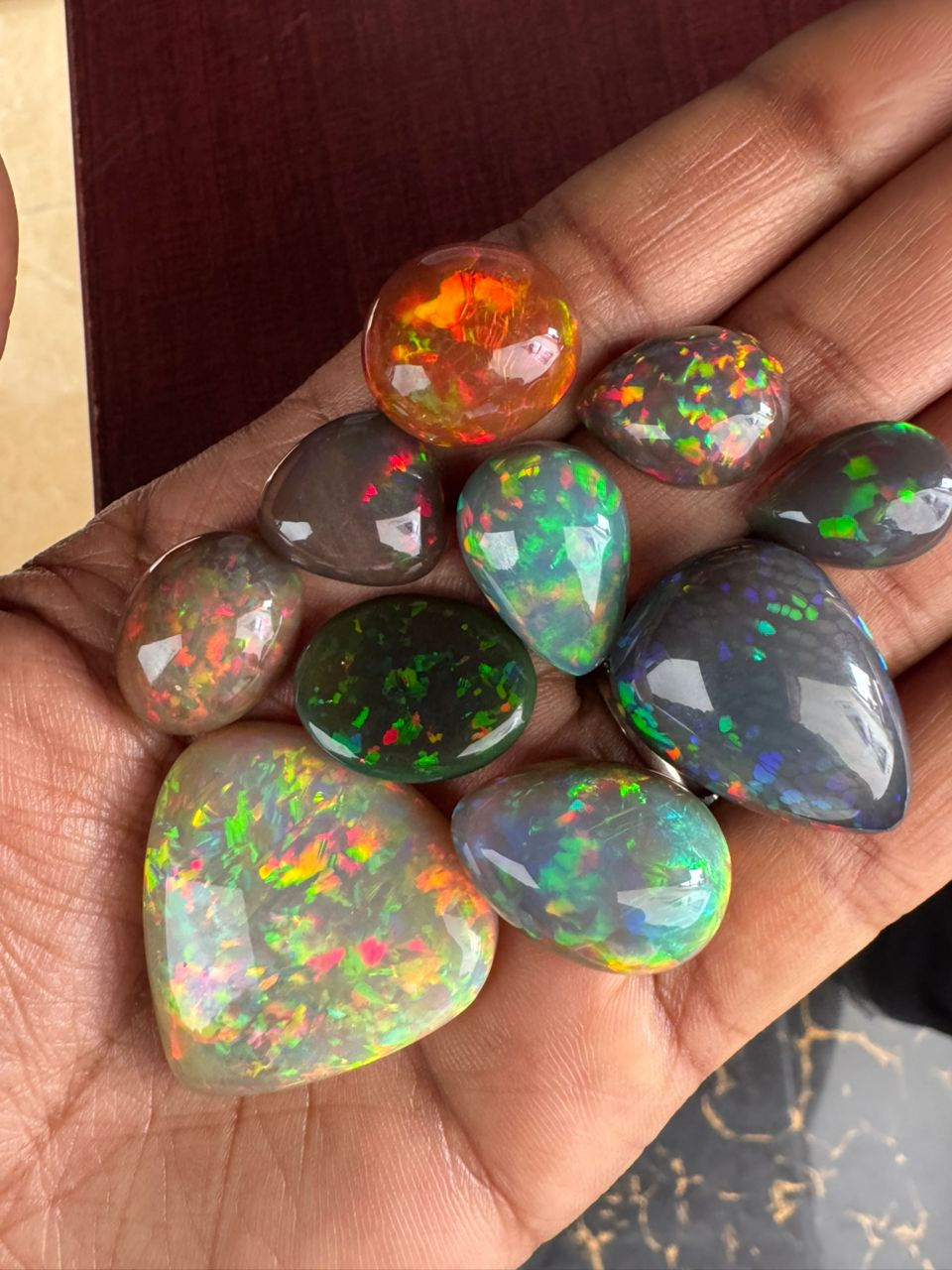
Multiple colors (red, green, blue, orange)
Broad, rolling patterns rather than tiny pinpoints
Even color distribution across the stone
The brighter and more dynamic the fire, the more valuable the opal.
2. Origin Matters Wollo Ethiopian Opals
Most premium Ethiopian opals come from the Wollo region of Ethiopia. These volcanic opals are known for:
Crystal-clear or translucent body tones
Honeycomb internal structures
Strong luminosity and depth
Stones from Wollo are widely considered among the finest Ethiopian opals available.
3. Clarity and Transparency
Ethiopian opals often have a crystal or semi-transparent body. Quality stones appear clean and allow light to travel through them, enhancing their internal fire.
Look for:
Minimal inclusions
No large cracks
Smooth internal appearance
Clear stones with strong fire are especially desirable.
4. Pattern Types
Certain internal patterns increase desirability:
Honeycomb pattern – cellular structure inside the stone
Floral or harlequin patterns
Broad flash – wide color bands
Distinct, rare patterns can increase value significantly.
5. Body Tone
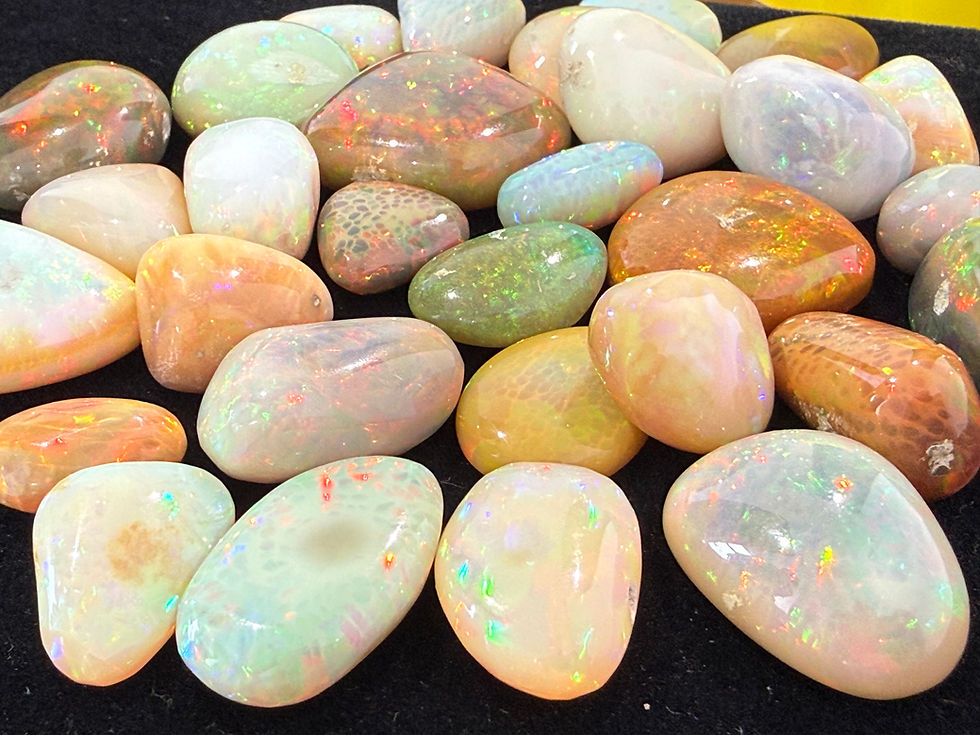
Ethiopian opals range from clear to milky to darker tones.
Crystal opals with transparency and bright color play are highly sought after. Darker body tones can create contrast, making colors appear stronger.
6. Hydrophane Nature
Many Ethiopian opals are hydrophane, meaning they can absorb moisture and temporarily change appearance. This is normal and part of their volcanic origin.
A high-quality Ethiopian opal will return to its original look once dry.
7. Cut and Shape
Well-cut opals maximize light reflection.
Look for:
Smooth domed cabochon cuts
Balanced proportions
Even polish
A good cut enhances color display.
8. Size vs Quality
Larger stones are attractive, but quality always matters more than size. A smaller stone with intense color and strong patterns can be more valuable than a large dull stone.
9. Durability and Care
Ethiopian opals should be protected from prolonged water exposure and harsh chemicals. Store separately to avoid scratches.
Final Thoughts
Choosing a high-quality Ethiopian opal comes down to brightness, color variety, clarity, pattern, and craftsmanship. When these elements combine, the result is a gemstone full of life and fire, making Ethiopian opals one of the most captivating stones in the world.

Comments